Introduction of Machine Learning
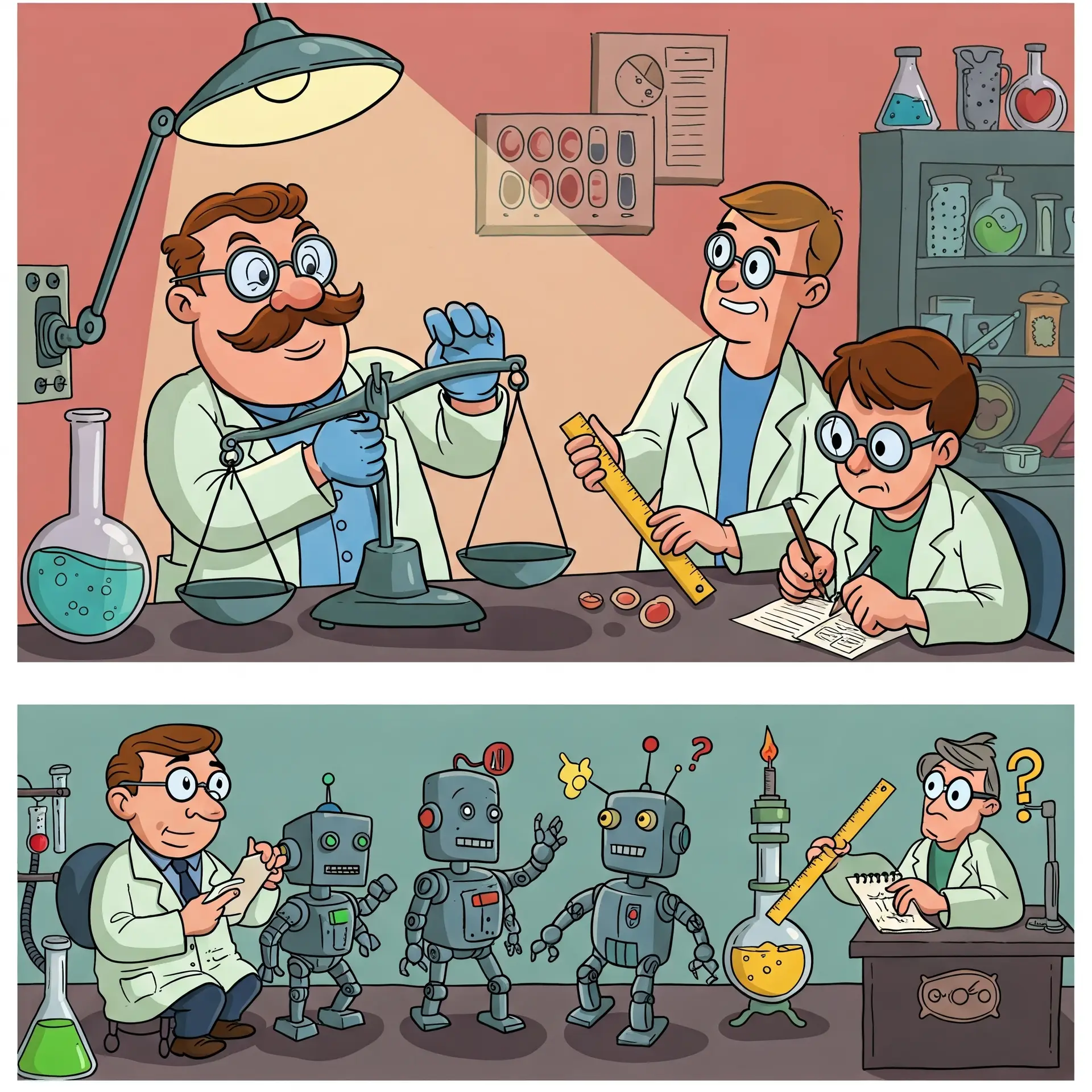
1. Introduction: Machine Learning
Machine Learning (ML) is a crucial subset of Artificial Intelligence (AI). Essentially, ML enables computers to "learn automatically from data and improve performance over time without being explicitly programmed". Instead of relying on fixed code instructions, ML solves problems by identifying patterns within large datasets.
The recent surge in ML development is attributed to the confluence of three technological infrastructure factors: exponential increase in the volume and variety of available data (Big Data), computation capacity becoming both cheaper and significantly more powerful (e.g., cloud computing and GPUs), storage costs becoming increasingly affordable. This convergence allows iterative algorithms to automatically generate models capable of analyzing large, complex data with greater speed and accuracy, even at massive scales.
2. Foundational Elements of Machine Learning
The operational process of Machine Learning can be likened to teaching a child. Instead of programming every detailed characteristic of a cat, for example, we provide the child with examples (data) and correct them when their erroneous responses. Through this trial-and-error, the child progressively develops their own recognition rules. Similarly, ML utilizes data to build models autonomously, bypassing rigid, manually programmed rules.
Three essential components are required for the machine learning process:
- Data – The Model's "Food": Data serves as the raw material from which the model learns. The quality, quantity, and relevance of the input data directly dictate the effectiveness and accuracy of the ML model. Organizations continuously accumulate massive volumes of data from various sources.
- Algorithm – The "Recipe": The algorithm is the set of complex mathematical rules the computer employs to process the data, detect patterns, and formulate predictions. Various algorithms are applied depending on the problem, such as Linear Regression for continuous value prediction, Naive Bayes for text classification, or Random Forest (an ensemble of Decision Trees).
- Model – The "Learned Product": The model is the final output after the algorithm has been trained on the data. This mathematical structure, having learned the patterns, is then ready to be deployed for making predictions or decisions on new data.
3. Three Fundamental Methods of Machine Learning
Machine Learning is categorized into three main methods based on how data is provided and the learning objective.
3.1. Supervised Learning
The algorithm is trained on a labeled dataset. Each input data point (X) is paired with a corresponding precise correct output (Y). The algorithm learns to map the input to the output. This resembles a teacher "supervising" a student by providing the correct answers for each example. The trained model is subsequently capable of predicting the output (Y′) for new, unseen data (X′).
Typical Problems:
- Classification: Predicting an output that belongs to a specific category (e.g., classifying email as spam or non-spam, diagnosing tumors as malignant or benign).
- Regression: Predicting an output that is a continuous value (e.g., predicting house prices based on area and location, or predicting sales volume).
3.2. Unsupervised Learning
The algorithm is tasked with uncovering hidden patterns and structure within unlabeled data. The input data (X) lacks corresponding labels or correct outputs (Y). The algorithm's goal is to automatically analyze the data to identify relationships, similarities, or differences, without human supervision or instruction. The algorithm autonomously discovers the underlying data structure.
Typical Applications:
- Clustering: Grouping similar data points together (commonly used for customer segmentation).
- Exploratory Analysis: Discovering the structure within the data.
- Anomaly Detection: Identifying data points or transactions that significantly deviate from the general pattern.
3.3. Reinforcement Learning (RL)
RL focuses on training an agent to make optimal decisions through interaction with an environment. RL simulates the human process of trial-and-error learning. The agent is not supplied with labeled data or specific instructions on the correct action.
Learning occurs through a simple feedback loop:
- Action: The agent performs an action in the current environment state.
- Feedback: The environment responds by transitioning to a new state and providing a Reward or Penalty. Goal: The agent adjusts its action strategy (Policy) to maximize the total accumulated reward over the long term.
RL is particularly effective for sequential decision-making problems, where the current action impacts future rewards. It serves as the foundation for AI in gaming, robotics control, and autonomous vehicles.
3.4. Comparison of the Three Fundamental ML Paradigms
| Criterion | Supervised Learning | Unsupervised Learning | Reinforcement Learning |
|---|---|---|---|
| Basic Definition | Learning from labeled data (Input + Output) | Discovering structure, patterns in unlabeled data | Learning through environment interaction to maximize reward |
| Input Data | Labeled data | Unlabeled data (Input only) | Learning from environment feedback (no pre-defined dataset) |
| Typical Problems | Classification, Regression | Clustering, Association, Dimensionality Reduction | Sequential decision-making, System optimization |
4. Practical Applications: ML Is Transforming Our Lives
Machine Learning (ML) has moved beyond research to deeply penetrate every facet of daily life and business. ML is currently driving significant transformations in the following areas:
- Recommendation Systems and Personalization: Providing unique user experiences by suggesting relevant content (movies, music) or products based on learned behavior and preferences.
- Image Recognition and Security: Utilizing advanced computer vision technology (e.g., Deep Learning) for facial recognition (Face ID), object classification, and enhancing security solutions.
- Medicine and Healthcare: Supporting medical diagnostics, aiding in the early detection of severe diseases (such as tumors), accelerating drug research, and developing personalized treatment plans.
- Natural Language Processing (NLP) and Translation: Enabling machines to comprehend and process human language, thereby improving the quality of instant machine translation (Google Translate) and enhancing the efficiency of customer support Chatbots.
- Finance, Commerce, and Logistics Optimization: Enhancing security by detecting fraudulent transactions, predicting stock market trends, and optimizing supply chains by identifying the most efficient transportation routes.